
Joyce Walker-Joseph
When "Young America's Favorite (White) Magazine" finally featured a Black cover model

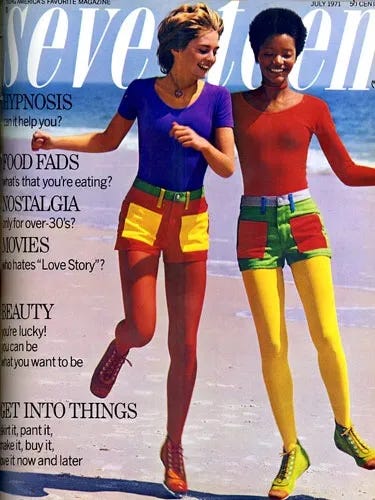
Joyce Walker, right, was the first Black model to appear on Seventeen’s cover, in July 1971, beside popular cover model Bonnie Lysohir.
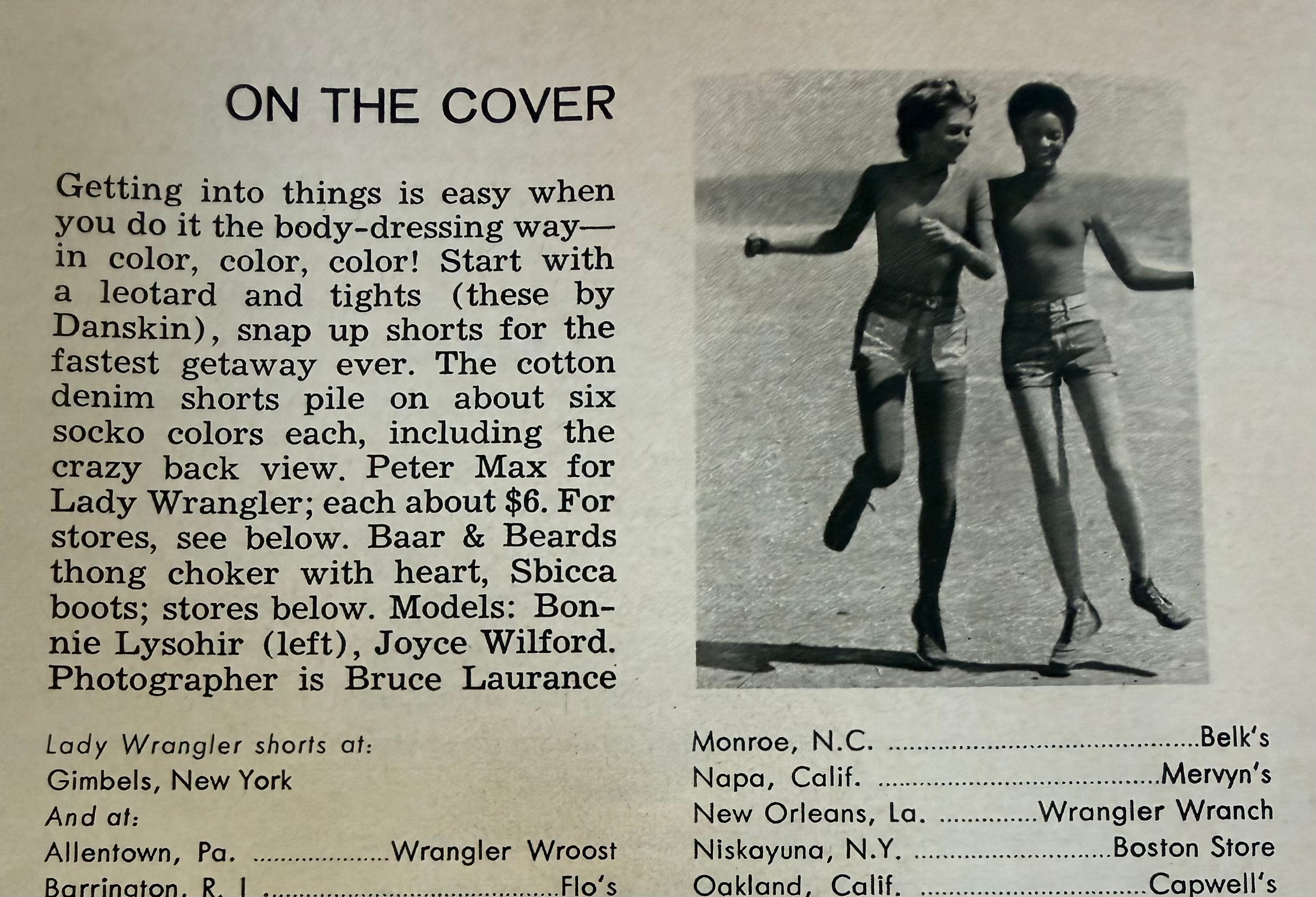
Joyce is identified incorrectly in the magazine as Joyce Wilford, but my research didn’t uncover a reason for this.
What led Seventeen magazine to feature a Black model on its cover for the first time since the magazine was introduced in 1944?
During the 70s, young people were engaging more in political issues like Watergate, anti-war protests, women’s rights, and the environment. Seventeen published articles on these topics, and in turn decided to lean toward more diverse models, to woo a larger audience of consumers, of course. So what brought Joyce Walker to this cover? Was it the pull of product sales or an actual desire on the magazine’s part to become more ethnically diverse? I think we know the answer.
This WWD article highlights the iconic Black models who walked runways as early as the 1940s. And 30 years later, despite the lack of an altruistic motive, Joyce’s Seventeen cover helped pave the way for other revolutionary women of color who changed the fashion and modeling world forever in the 70s.
Photos of Joyce appear in Seventeen editorials in 1970, but not on covers that year. The July 1971 mag uses Joyce in both ads and editorial, the first time a Black model graced this many pages. She first appears in an ad promoting a contest sponsored by the American Wool Council and McCall’s Patterns.
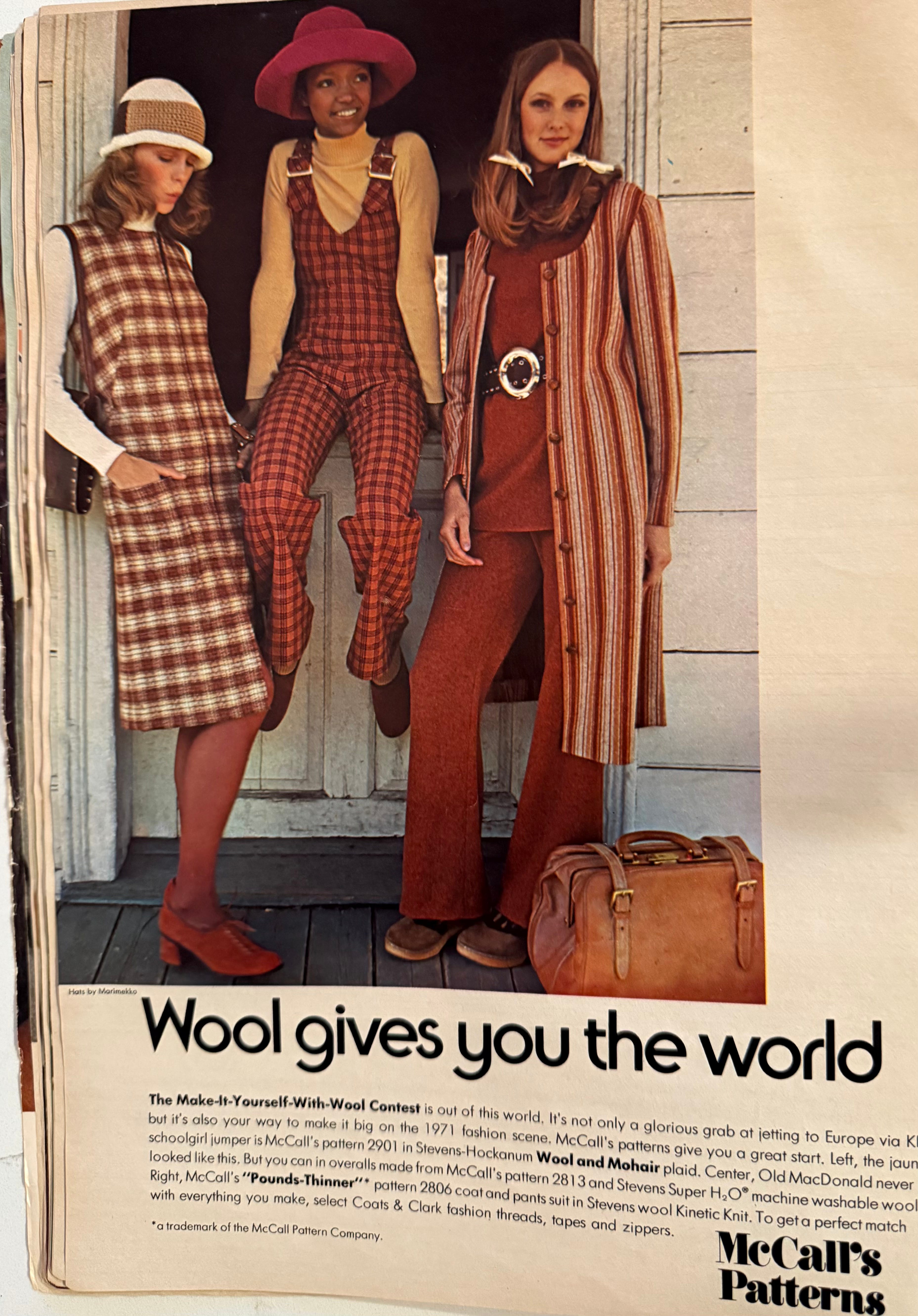
An editorial article about hair products includes a Black model, possibly Donyale Luna.
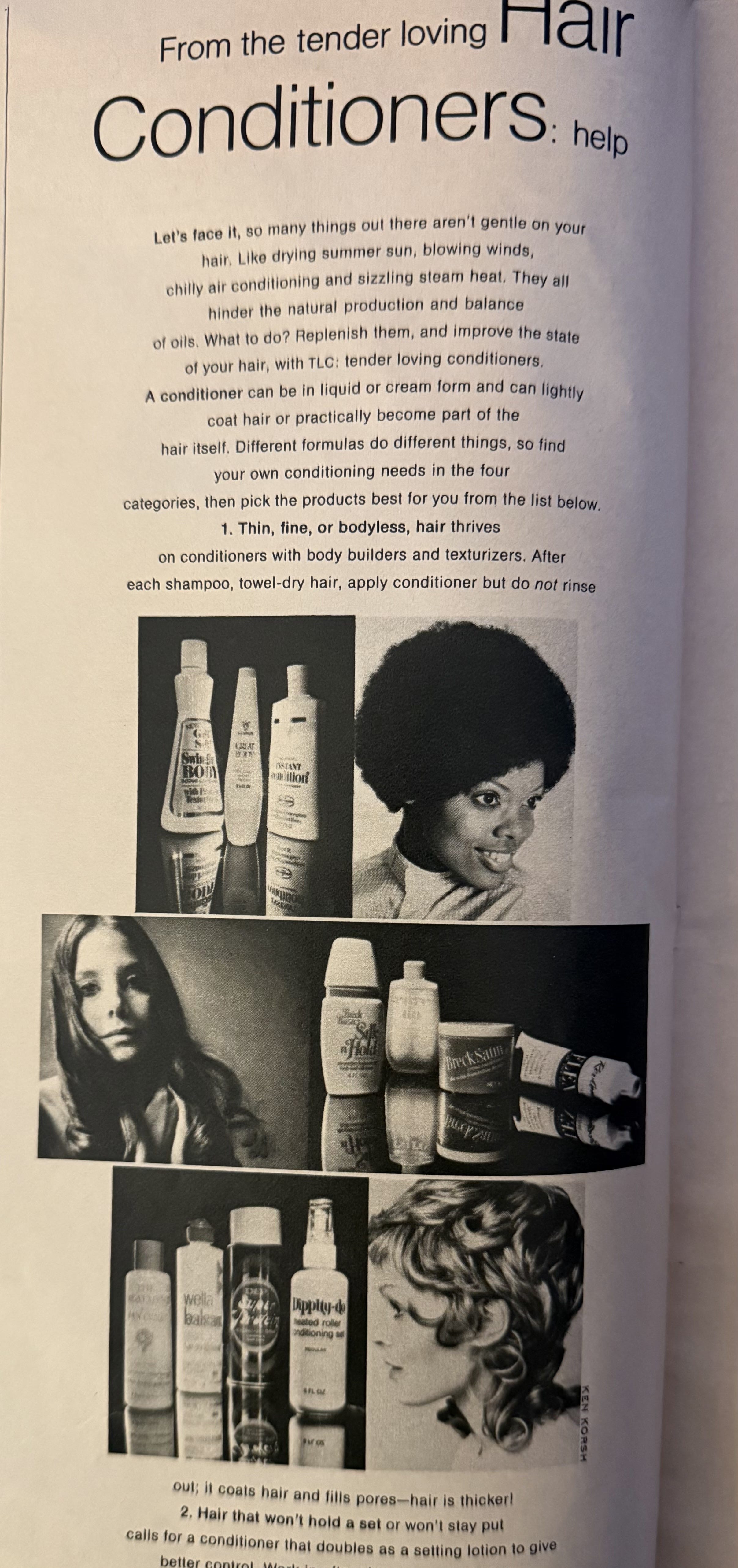
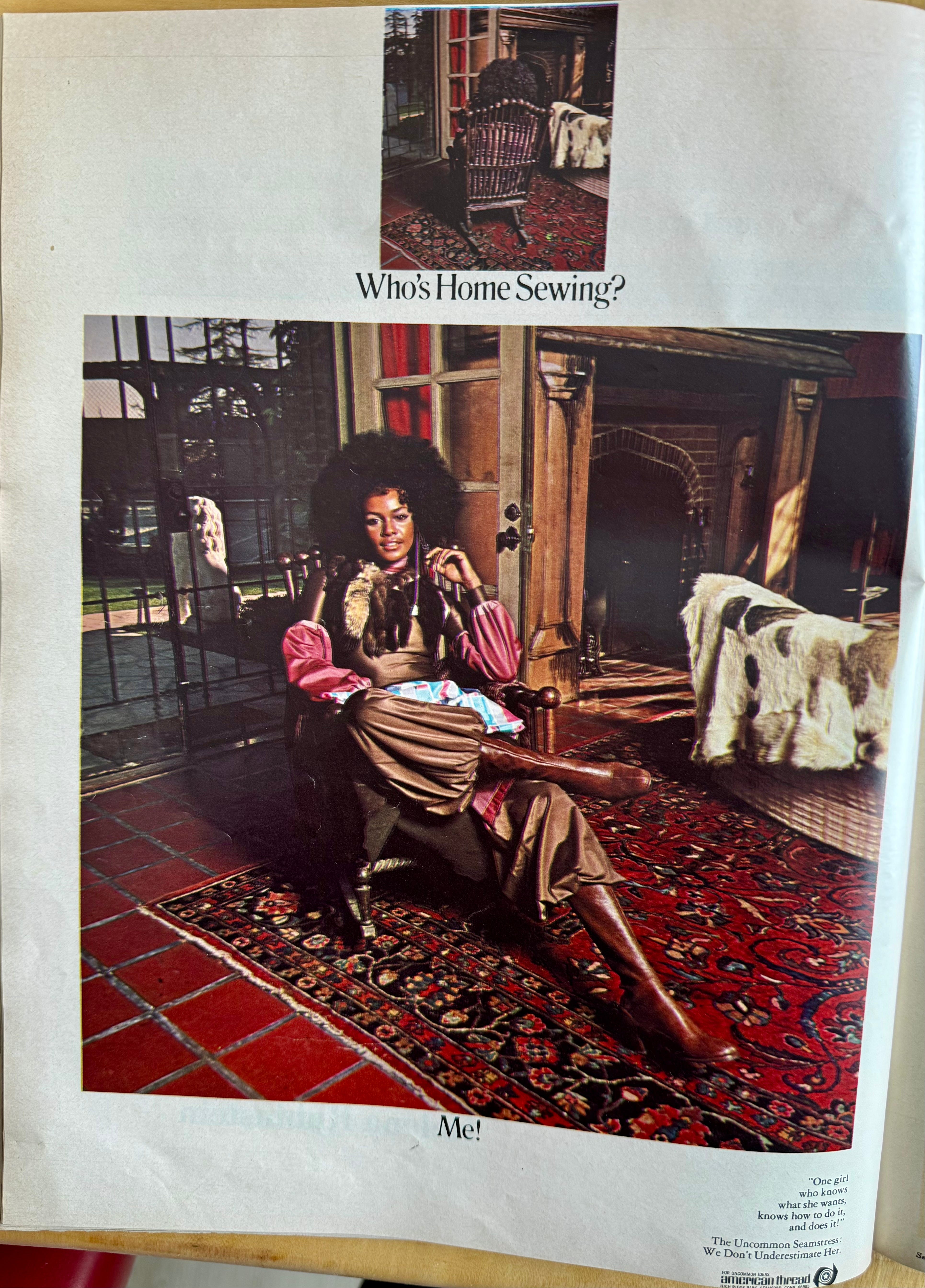
Home sewing was popular with teenage girls in 1971. Seventeen promoted the idea heavily, and that year’s issues are full of fabric, thread, and pattern ads.
At my high school, Home Ec was a required class, for girls only. Imagine teaching a dude how to be a homemaker. Our Home Ec teacher tried to teach me to sew. All the girls in the class spent freshman year making a jumper using the same pattern, with the fabric of our choice. I was too busy making up ways to subvert any serious work in that class to finish my jumper. Sewing clothes is a skill I’d love to have now.
Here’s a gorgeous ad for American Thread Company, also possibly featuring Donyale Luna.
So let’s see how diverse our old pal Edwin Miller’s music recommendations were in July 1971.
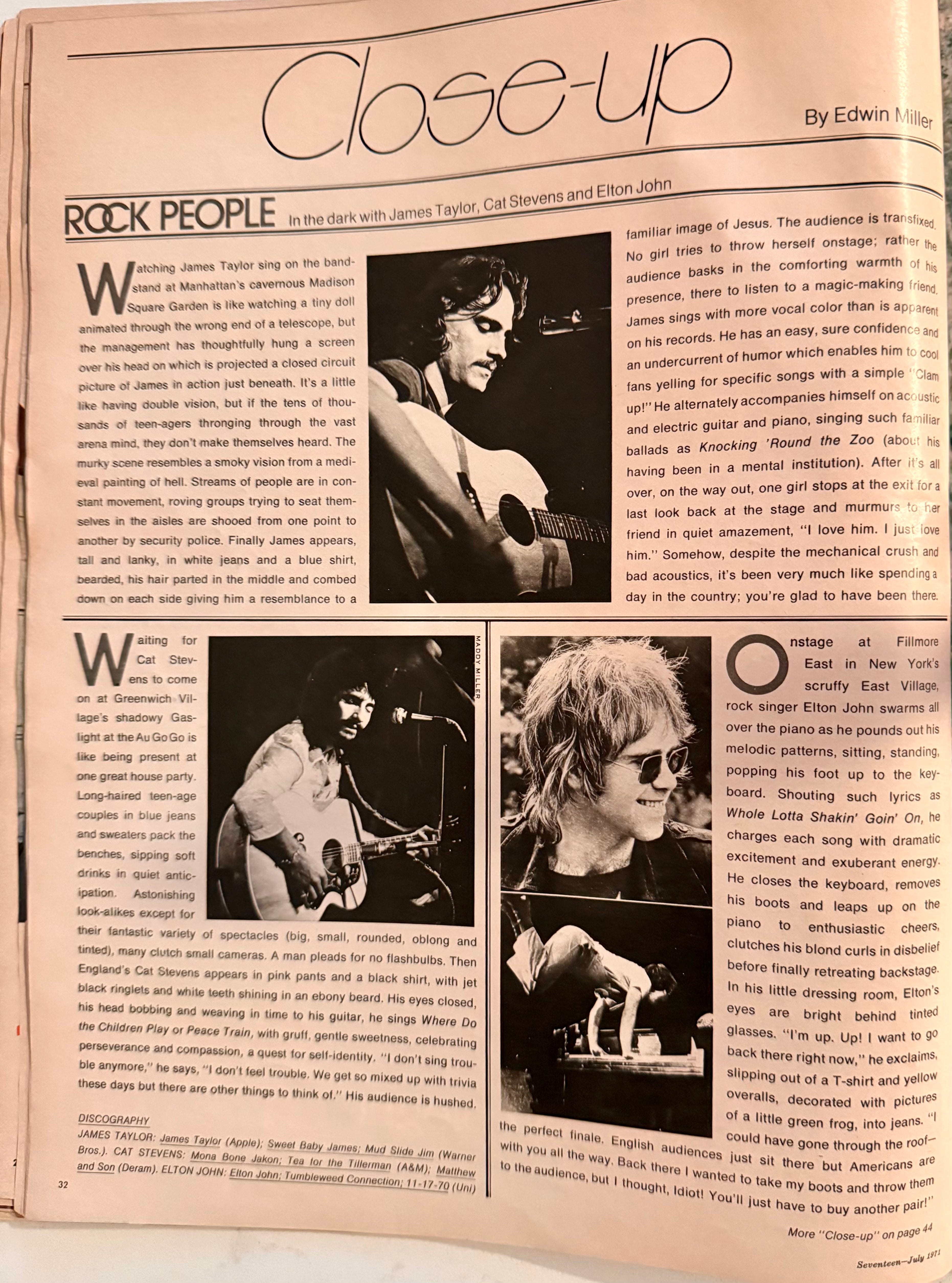
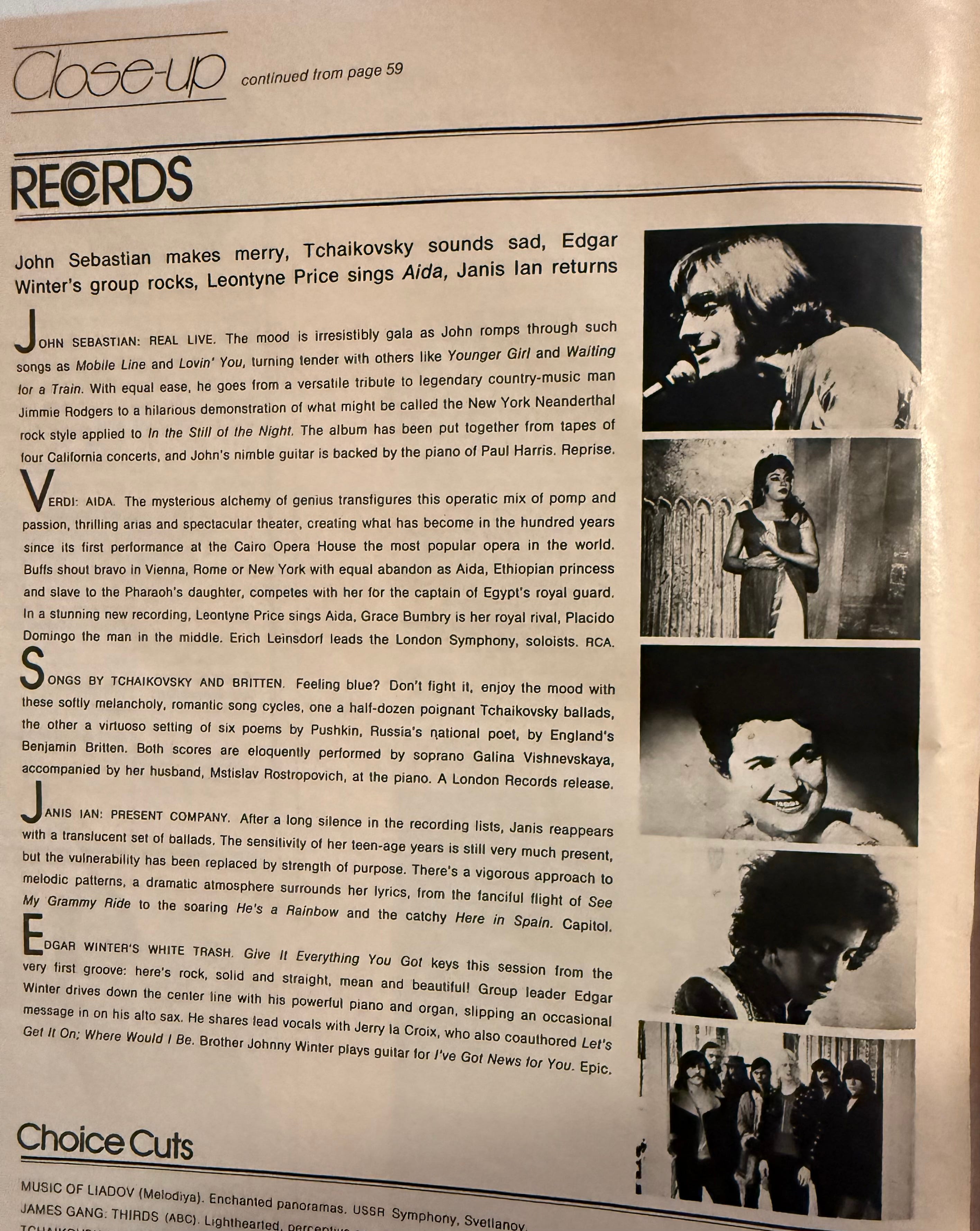
Not so much. But what a fun introduction to some future rock icons.
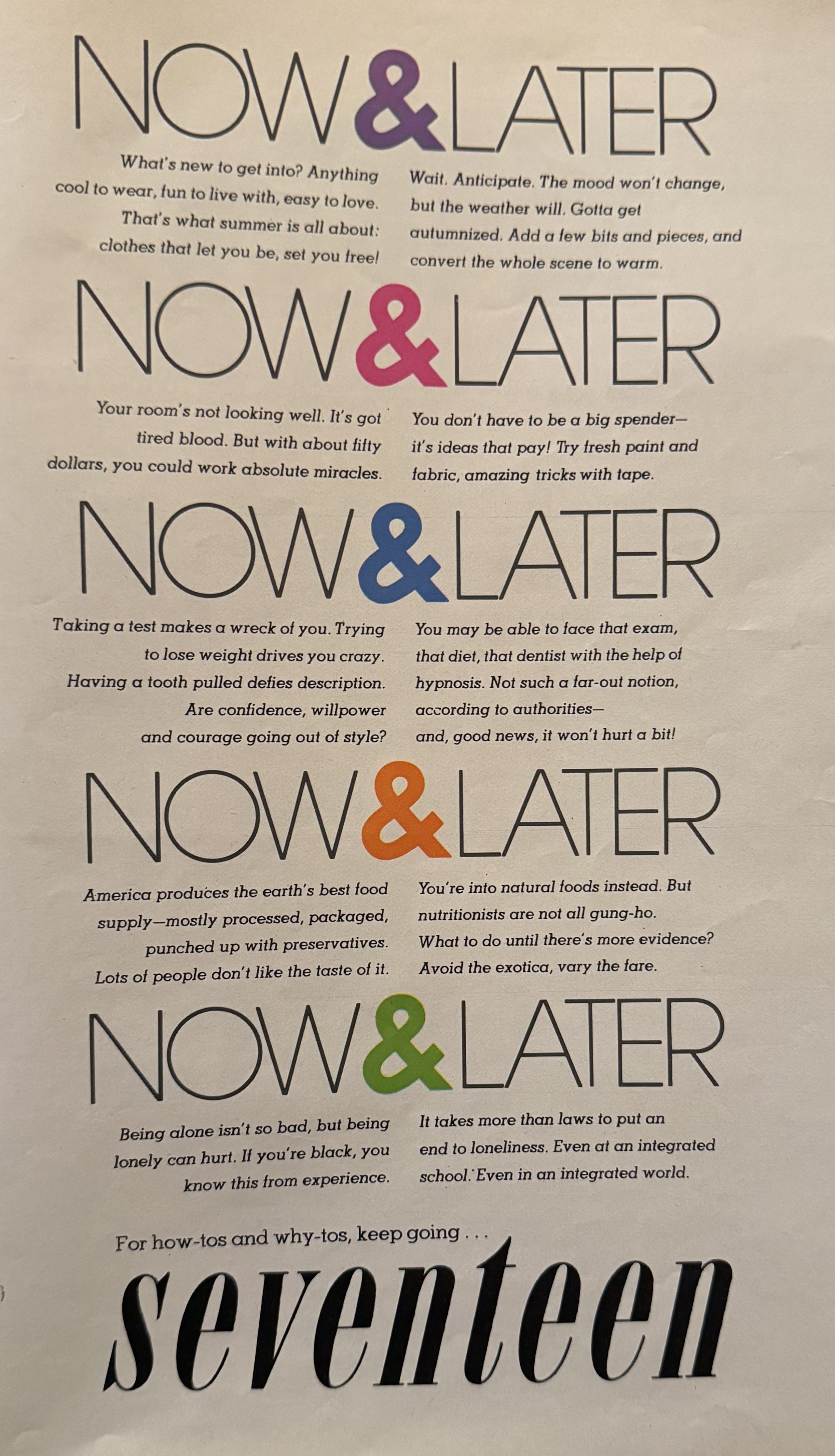
The first page of the editorial section always carried a theme to set the mood. Here we’re focused on what’s now, and what’s later.
The racial divide is addressed in the final NOW, as “Being alone isn’t so bad, but being lonely can hurt. If you’re black, you know this from experience.” A mouthful. And the LATER keeps things real. “It takes more than laws to put an end to loneliness. Even in an integrated school. Even in an integrated world.”
Even in 2025.
And Joyce is back, wearing some of my absolute favorite clothes of the era. I embraced the era of the color blocks, bright tights, and ahem, hot pants.
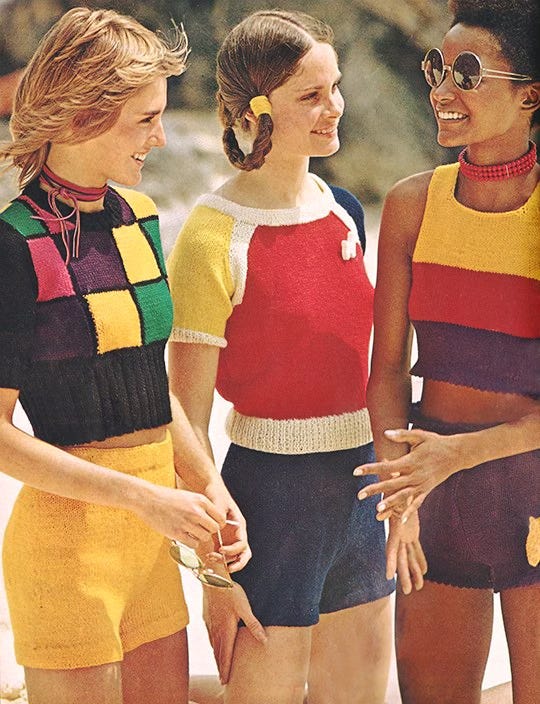
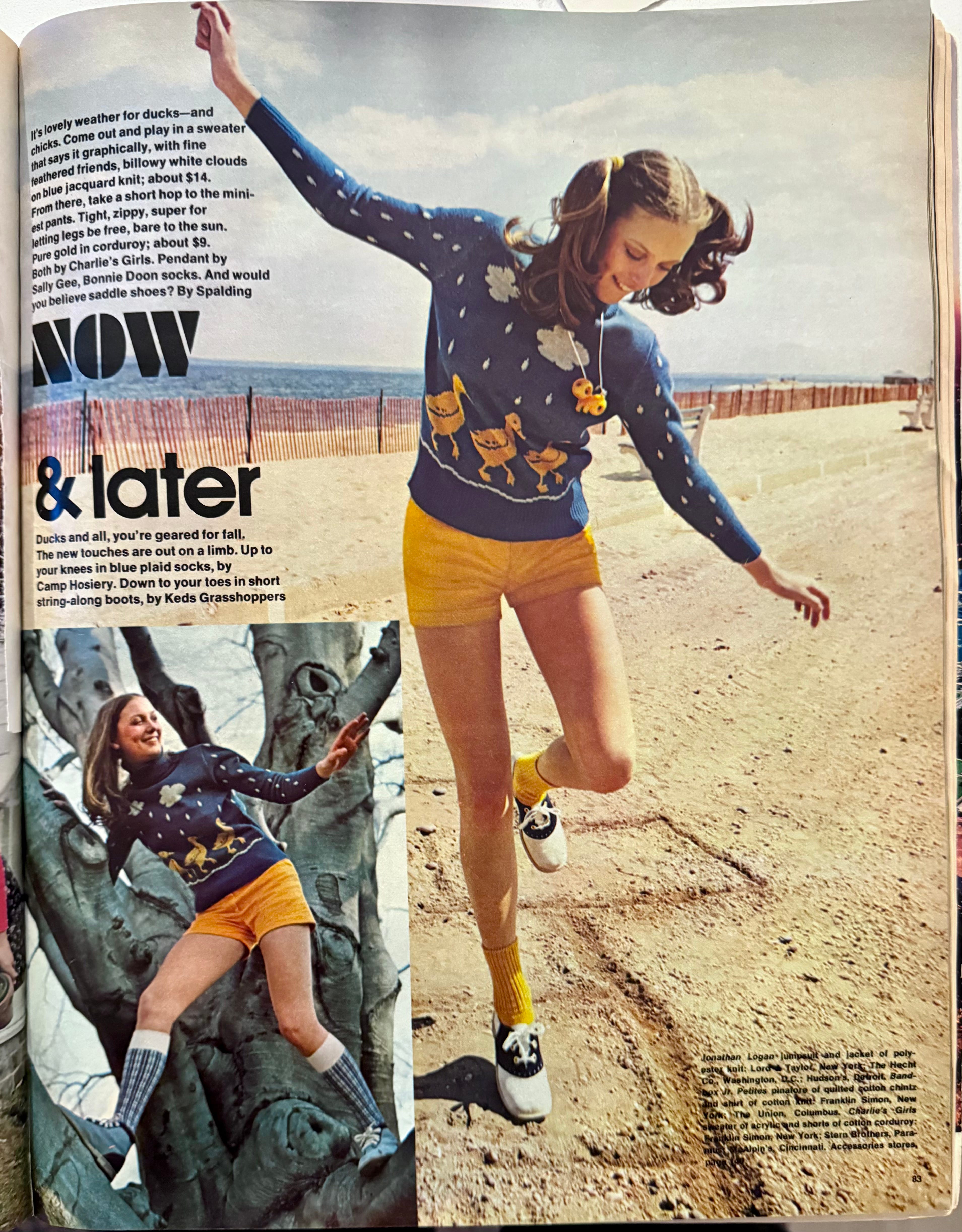
I loved the multi-colored knitwear and the fun figurative designs, and I LOVED my Spalding saddle shoes, sourced from the magazine and ordered from B.Dalton in NYC. Money from my job, well spent.
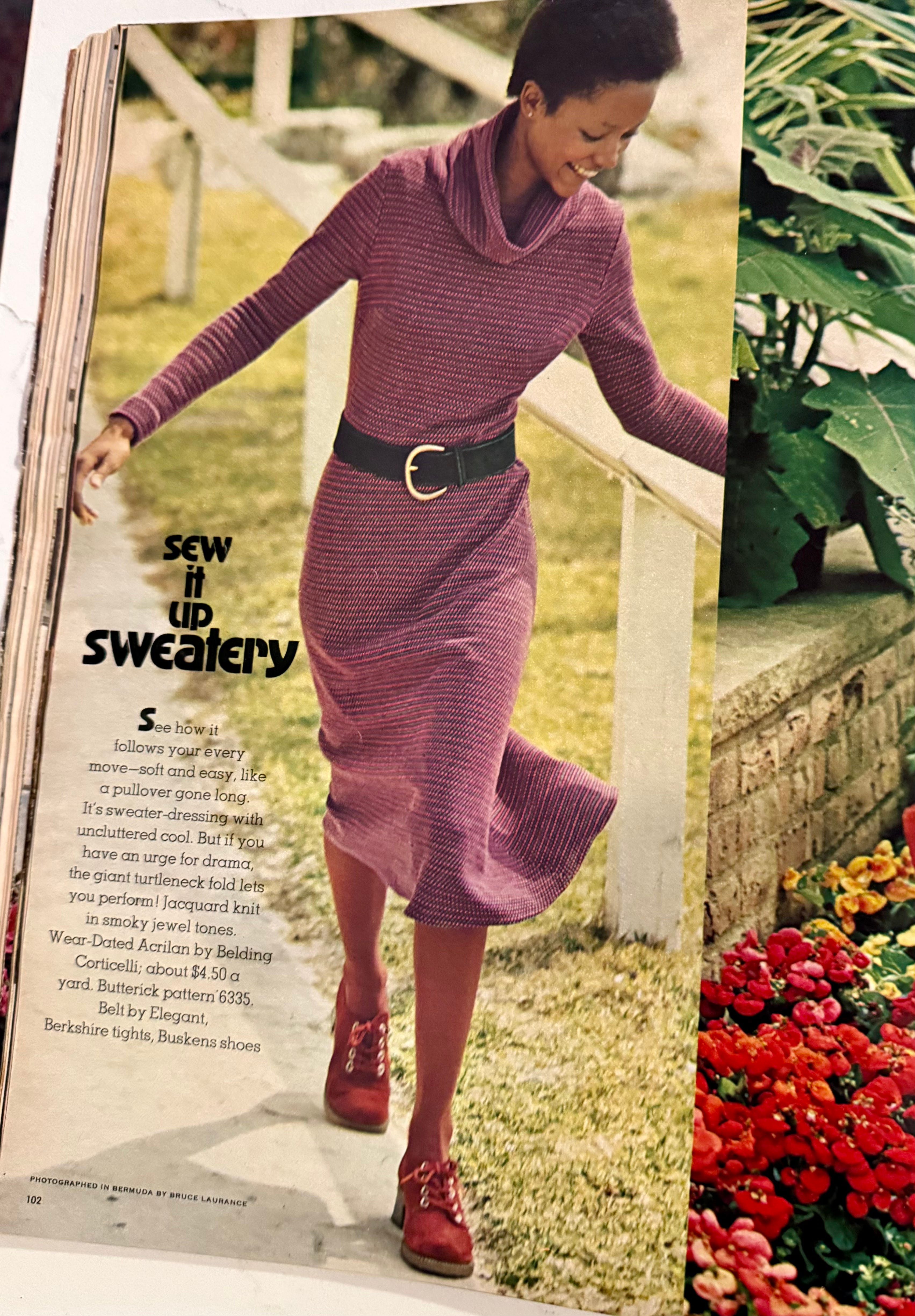
Joyce again, in a beautiful knit dress I’d wear today. Shoes and belt too.
Check out this article about individuality. Those tricky writers tried to convince us that even a stunning model like Ingrid Boulting has flaws. Ingrid was the face of Biba, an iconic London fashion store. The poor thing has to use shading to make her face look less round. And you can, too! Oh no, she’s got those “round and quite muscular” legs from years of ballet training. But she doesn’t care!
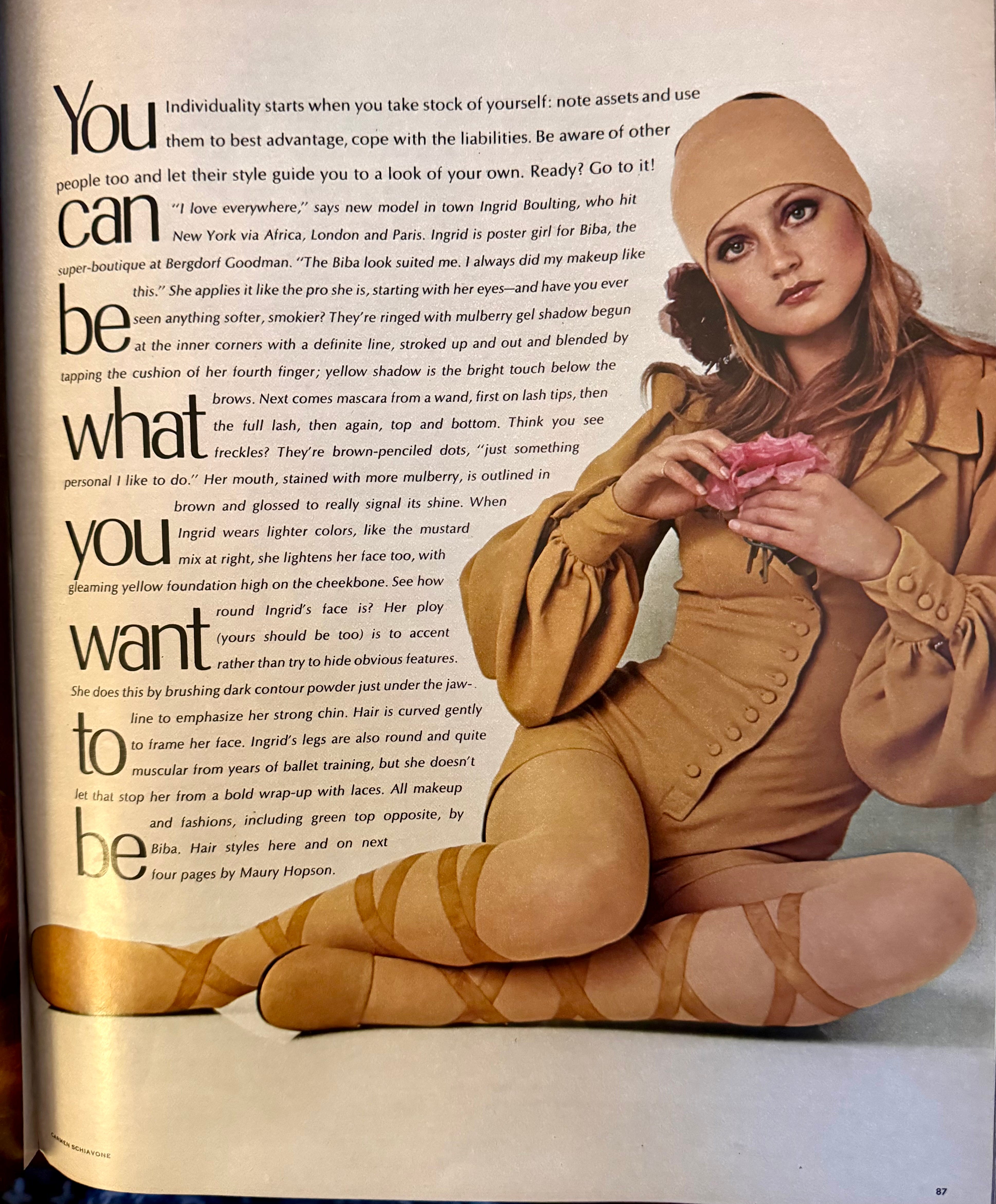
For more on Ingrid, I’d love to introduce you to one of my favorite podcasts, Laura McLaws Helms’ Sighs and Whispers and her accompanying Substack, Sighs & Whispers. Laura does fascinating research, and chooses multi-talented, pioneering subjects to interview, and most refreshingly, lets them talk.
Hey girls, “you can keep your own identity.” Hmm, that’s a new concept in the pages of this mag, which leans heavily on assimilation and conformity.
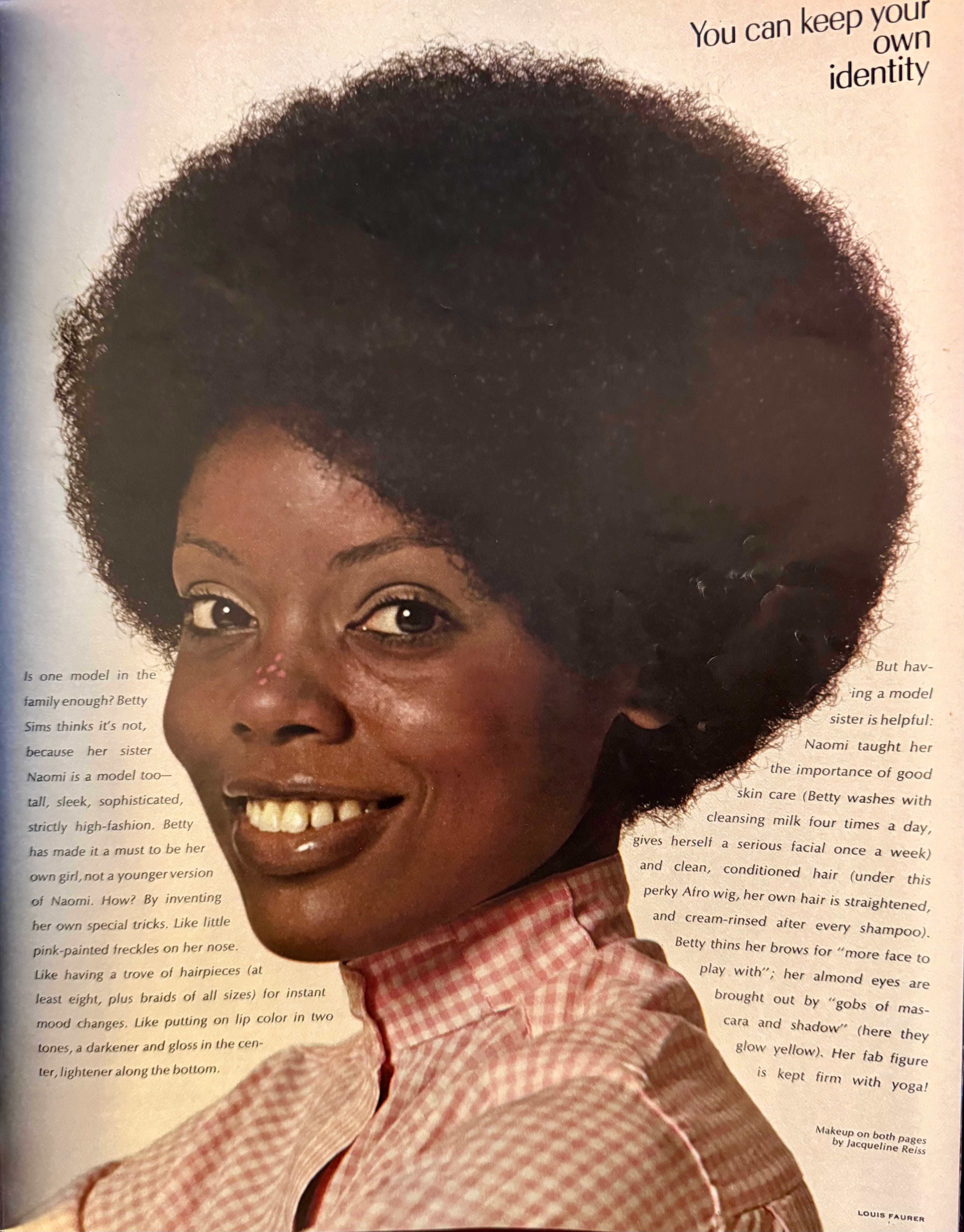
Betty Sims, the model on this page, is the older sister of Naomi Sims, one of the first Black supermodels in America. Naomi and Betty were born in Oxford, Mississippi, and their paths took them to Pittsburgh then New York City. Both survived trauma and hardship along the way, and both became iconic role models for generations of Black girls and women.
Betty is the mother of Abrima Sims-Erwiah, the co-founder of Studio 189, a brand which operates an e-commerce site, a manufacturing facility in Accra, and supports various community led projects in Africa and in the USA.
Like her mother and aunt, Abrima understands and utilizes the power of fashion and beauty as vehicles for social change.
I encourage you to follow the links above to learn their stories.
Next up: Back to Joyce Walker, who finally had the full cover to herself in November 1972. Joyce never intended to become a model, and later married Jamal Joseph and became an activist in the Black is Beautiful movement of the 1970s.
I’m proud to be part of the Iowa Writers Collaborative.
Click the link to read the work of my fellow writers, all with Iowa connections. We’ve got lots of projects up our collective sleeves, including online classes. We provide content for free, with paid subscription options. When you subscribe, the variety of topics and voices will add spice to your daily reading, I promise. Thank you!
Great as always Kitty!
News Flash: “You can keep your own identity.” What a concept! But I do have to say that I, too, had a pair of saddle shoes and multiple pairs of hot pants. And sewed a lot of my own clothes under the guidance of my grandma. I even made my own winter coat as an adult. But boys in Home Ec? HA! Although in 1973, a girl in our class took Shop. She was our hero!